




The Ultimate Guide to Dhoti Style: Tradition, Fashion, and Modern Elegance
The Ultimate Guide to Dhoti Style: Tradition, Fashion, and Modern Elegance
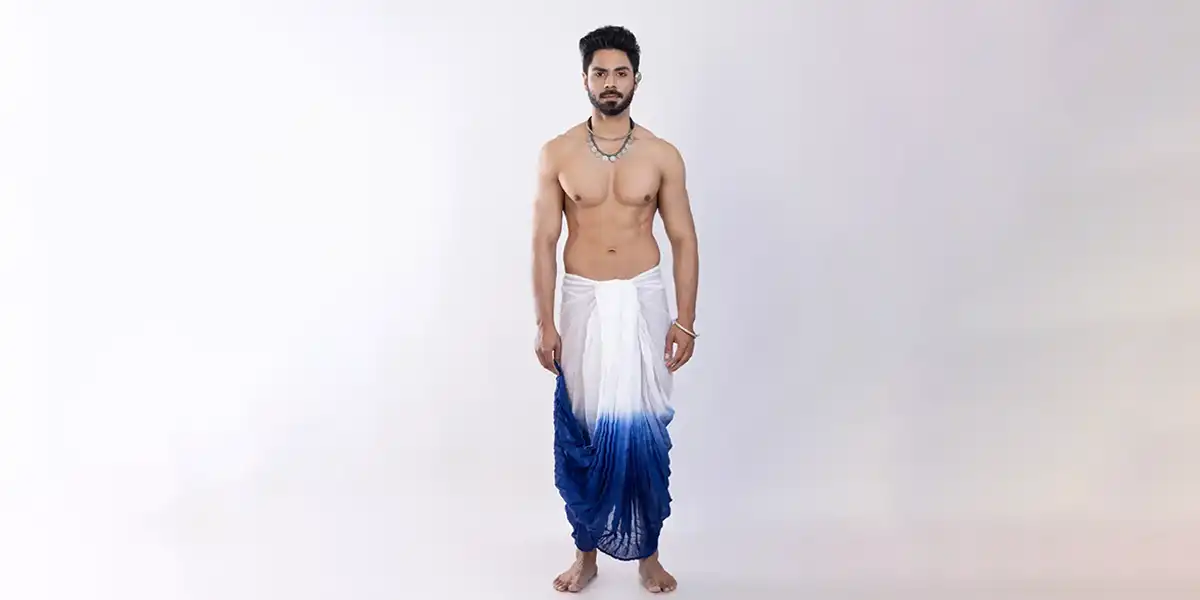
The dhoti is more than just a piece of unstitched fabric; it is a symbol of India’s rich cultural tapestry. From the temples of Varanasi to the wedding halls of Chennai, the dhoti style for men has remained a constant for millennia. Whether you are looking for a dhoti for pooja or a contemporary stitched dhoti for a gala, understanding the nuances of this garment is key to pulling it off with grace.
In this guide, we explore everything from dhoti history to the different types of dhoti styles that define Indian masculinity today.
The Roots: Dhoti History and Cultural Significance
The dhoti in India dates back to the Vedic period. Historically, it was worn by both men and women, but over the centuries, it evolved into the primary lower garment for Indian men. The word itself is derived from the Sanskrit word dhauta, meaning “washed” or “clean,” signifying its association with purity and ritual.
In the past, the dhoti pattern and the way it was draped indicated a person’s region, caste, and social status. Today, it stands as a mark of national identity and a bridge between the ancient and the modern.
Choosing the Right Dhoti Material
The comfort and look of your attire depend heavily on the dhoti material. Since the garment involves wrapping and tucking, the dhoti fabric needs to be breathable yet sturdy.
1. Cotton Dhoti for Pooja
For religious ceremonies, a cotton dhoti for pooja is the gold standard. Cotton is considered “Sattvic” (pure) in Indian tradition. Many men prefer organic cotton because it is free from chemicals and gentle on the skin during long rituals.
2. Silk Dhoti for Weddings
When it comes to grand occasions, the silk dhoti is unmatched. Often featuring a rich gold border (Zari), silk provides a sheen and structure that cotton cannot replicate.
3. Handmade and Organic Options
With the rise of sustainable fashion, the handmade dhoti has seen a resurgence. Using organic clothing practices, these dhotis support local weavers and offer a unique, rustic texture that mass-produced fabrics lack.
Types of Dhoti Styles : North vs. South
The beauty of the dhoti in India lies in its diversity. Depending on where you are, the wearing of the dhoti changes completely.
South Indian Dhoti Style
In the South, the garment is often referred to as a Veshti or Mundu. The south indian dhoti style is typically a single dhoti (4 cubits long) wrapped simply around the waist and tucked at the side. It is known for its minimalism and elegance.
1. Dhoti in South India:
Often worn with a shirt or an Angavastram (shoulder cloth).
Often worn with a shirt or an Angavastram (shoulder cloth).
2. The Fold:
Men often fold the dhoti in half, lifting the bottom edge to the waist for better mobility.
Men often fold the dhoti in half, lifting the bottom edge to the waist for better mobility.
North Indian Dhoti
The north indian dhoti is more complex, involving a pleated front and a tuck at the back (the kachcha style). This style provides more coverage and is often seen in states like Uttar Pradesh, Bihar, and West Bengal. It is the classic “pancha” style seen in historical depictions.
Modern Innovations: The Readymade and Stitched Dhoti
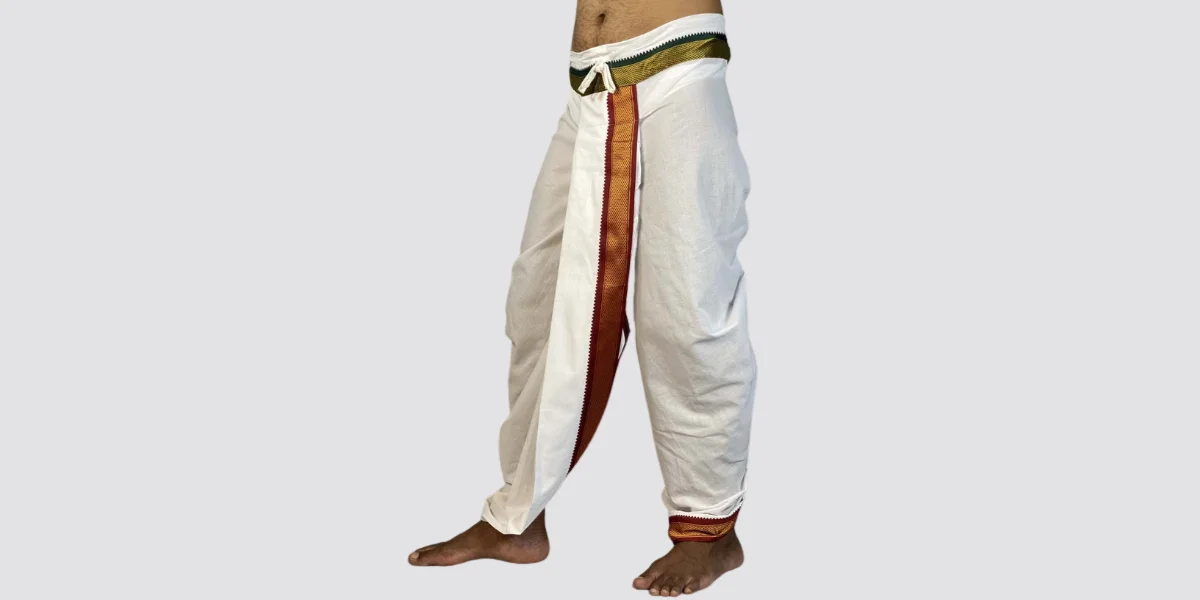
For the modern man who finds the traditional draping process intimidating, the fashion industry has introduced the readymade dhoti.
1. Stitched Dhoti:
These stitched dhotis look like traditional dhotis but function like trousers. They come with an elastic waistband and pre-stitched pleats.
These stitched dhotis look like traditional dhotis but function like trousers. They come with an elastic waistband and pre-stitched pleats.
2. Printed Dhoti:
To cater to the younger generation, printed dhoti designs featuring floral, geometric, or abstract patterns are now popular for Mehndi and Sangeet functions.
To cater to the younger generation, printed dhoti designs featuring floral, geometric, or abstract patterns are now popular for Mehndi and Sangeet functions.
How to Select the Perfect Dhoti for Men
Buying a dhoti isn’t just about picking a color. You need to consider the dhoti size for men.
Type | Length (Standard) | Best For |
Single Dhoti | 2 Meters | Daily wear, casual South Indian style |
Double Dhoti | 4 Meters | Weddings, formal events, heavy pleating |
Readymade Dhoti | Waist-based (S, M, L, XL) | for beginners and travelers |
• Pro Tip:
Always check the cotton fabric quality. A higher thread count means the dhoti will be less transparent and will hold its pleats better.
Always check the cotton fabric quality. A higher thread count means the dhoti will be less transparent and will hold its pleats better.
Styling Tips: Perfecting the Dhoti Style for Men
1. For a Wedding:
Pair a cream silk dhoti with a contrasting silk kurta and a pocket square.
Pair a cream silk dhoti with a contrasting silk kurta and a pocket square.
2. For a Festive Look:
Choose a printed dhoti and a short Nehru jacket.
Choose a printed dhoti and a short Nehru jacket.
3. For Daily Rituals:
Stick to a simple white cotton dhoti with a thin colored border.
Stick to a simple white cotton dhoti with a thin colored border.
4. Footwear:
Dhotis look best with traditional Mojaris, Kolhapuri chappals, or leather sandals. Avoid sneakers at all costs!
Dhotis look best with traditional Mojaris, Kolhapuri chappals, or leather sandals. Avoid sneakers at all costs!
Caring for Your Dhoti
To ensure your handmade dhoti or silk dhoti lasts for years, follow these care steps:
1. Wash:
Hand-wash cotton dhotis in cold water. Dry-clean silk dhotis to maintain the luster of the Zari
Hand-wash cotton dhotis in cold water. Dry-clean silk dhotis to maintain the luster of the Zari
2. Ironing:
Always iron your dhoti while it is slightly damp to get crisp, sharp pleats.
Always iron your dhoti while it is slightly damp to get crisp, sharp pleats.
3. Storage:
Store silk dhotis in muslin bags to prevent the fabric from breathing and the metal work from tarnishing.
Store silk dhotis in muslin bags to prevent the fabric from breathing and the metal work from tarnishing.
Conclusion
The dhoti style is a timeless expression of Indian heritage. Whether you are embracing the simplicity of a single dhoti for a quiet morning prayer or opting for the convenience of a readymade dhoti for a friend’s wedding, you are participating in a tradition that has survived for thousands of years.
From organic cotton to shimmering silk, the variety of dhotis for men ensures that there is a perfect fit for every personality and every occasion.
FAQ's
A dhoti is a traditional Indian lower garment consisting of a long, unstitched rectangular piece of fabric, typically 4.5 meters in length. Derived from the Sanskrit word dhauti (to wash), it signifies purity and is a staple in dhoti history. It is draped around the waist and legs, often knotted at the navel. While usually made of cotton fabric, a silk dhoti is preferred for weddings.
To master wearing dhoti in the classic North Indian style:
- Center the fabric behind you and bring both ends forward.
- Tie a secure knot at the waist.
- Pleat the left side and tuck it into the waistband at the back (the kachcha style).
- Pleat the remaining right side and tuck it securely at the front center.
The south indian dhoti style (Veshti or Mundu) is simpler:
- Wrap the fabric around your waist once.
- Ensure the ends overlap in the front.
- Tuck the outer corner at the waist.
- For ease of movement (the “walking” style), lift the bottom edge and tuck it into the waistband, creating a shorter, wrap-around look.
Dhoti pants are a modern, pre-stitched version of the traditional garment. They pair exceptionally well with:
- Short Kurtas: For a casual, ethnic look.
- Nehru Jackets: To add a layer of sophistication.
- Slim-fit Shirts: For a fusion “Indo-Western” vibe.
- T-shirts: For a relaxed, bohemian summer style.
A dhoti kurta is a complete traditional ensemble featuring a dhoti as the bottom wear and a kurta (a long tunic-style shirt) as the top. This combination is the quintessential dhoti for men at festivals and weddings, symbolizing elegance and cultural heritage.
Beyond the regional North and South styles, you can experiment with:
- Bengali Style: Featuring a large, decorative front fan of pleats.
- Maharashtrian Style: A more secure, trouser-like drape used for active movement.
- Panchakacham: A formal 5-yard drape used primarily in religious ceremonies.
- Modern Fusion: Using a printed dhoti paired with a blazer or leather jacket.
To tie a dhoti south indian style (specifically the Veshti):
- Hold the dhoti horizontally and wrap it around your waist.
- Bring the right end over to the left and the left end over to the right.
- Align the borders and roll the top edge inward at the waist to lock it in place. No knots are typically required for this minimalist drape.
When deciding what to wear on dhoti, consider the occasion:
- For Weddings: A silk shirt or a heavy embroidered kurta.
- For Pooja: A simple cotton dhoti for pooja paired with a matching cotton shirt or an Angavastram.
- For Casual Wear: A linen shirt with rolled-up sleeves or a short printed dhoti
- Footwear: Always complete the look with Kolhapuri chappals or Mojaris.
Related BLOG

Follow Us